Choosing technology and software architecture is one of the fundamental decisions at the start or redesign of any digital product. Many problems that arise in later stages of development, maintenance, or scalability are rooted in initial decisions made without sufficient analysis of technology, system structure, and development patterns. Therefore, technology and architecture consulting is not merely about suggesting a few programming languages or frameworks; it is an analytical and strategic process that must be carried out considering business goals, technical constraints, team capacity, budget, time, security, and the product's growth vision.
In this service, the nature of the product is first examined in detail. For example, there is a significant difference between the appropriate architecture for a SaaS platform, a marketplace, a content application, an enterprise system, a real-time system, or an API-based service. Each type of product has its own consumption patterns, traffic volume, security requirements, integration needs, and performance sensitivities. Therefore, technology selection should be based on the actual usage scenario of the product, not merely on the popularity of tools in the market.
One of the most important parts of this process is analyzing the technical and non-technical requirements of the project. Technical requirements include system type, complexity of business logic, user concurrency level, need for heavy processing, data structure, response speed, and future extensibility. In contrast, non-technical requirements relate to issues such as cost of ownership, time to market, ability to attract specialized workforce, ease of maintenance, infrastructure stability, security, and risk of dependency on specific technology. A correct choice can only be made when both categories of requirements are considered together.
- Analyzing product type and business model
- Reviewing user volume, traffic, and projected growth
- Evaluating security, scalability, and availability requirements
- Analyzing the capabilities and experience of the existing technical team
- Reviewing development, maintenance, and upgrade costs in the long term
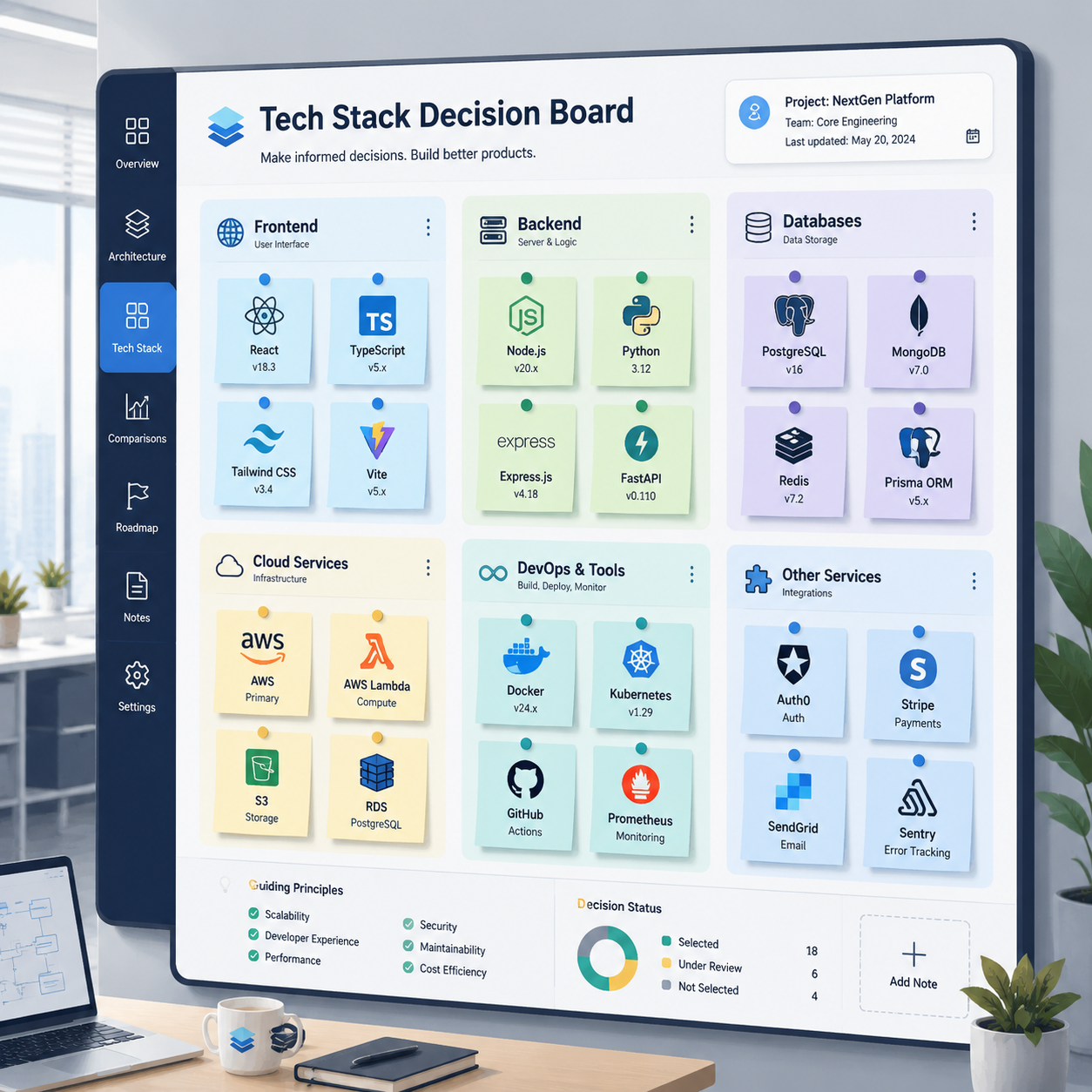
In the technology stack selection section, decisions about frontend, backend, database, infrastructure, auxiliary services, and development tools should be made in an integrated manner. For example, the choice of React, Next.js, Node.js, Python, Go, Java, PostgreSQL, MongoDB, Redis, Docker, Kubernetes, AWS, Vercel, or other technologies should be evaluated in relation to each other. The right choice occurs when these components are balanced in terms of performance, cost, developer community, maintainability, and compatibility with product needs.
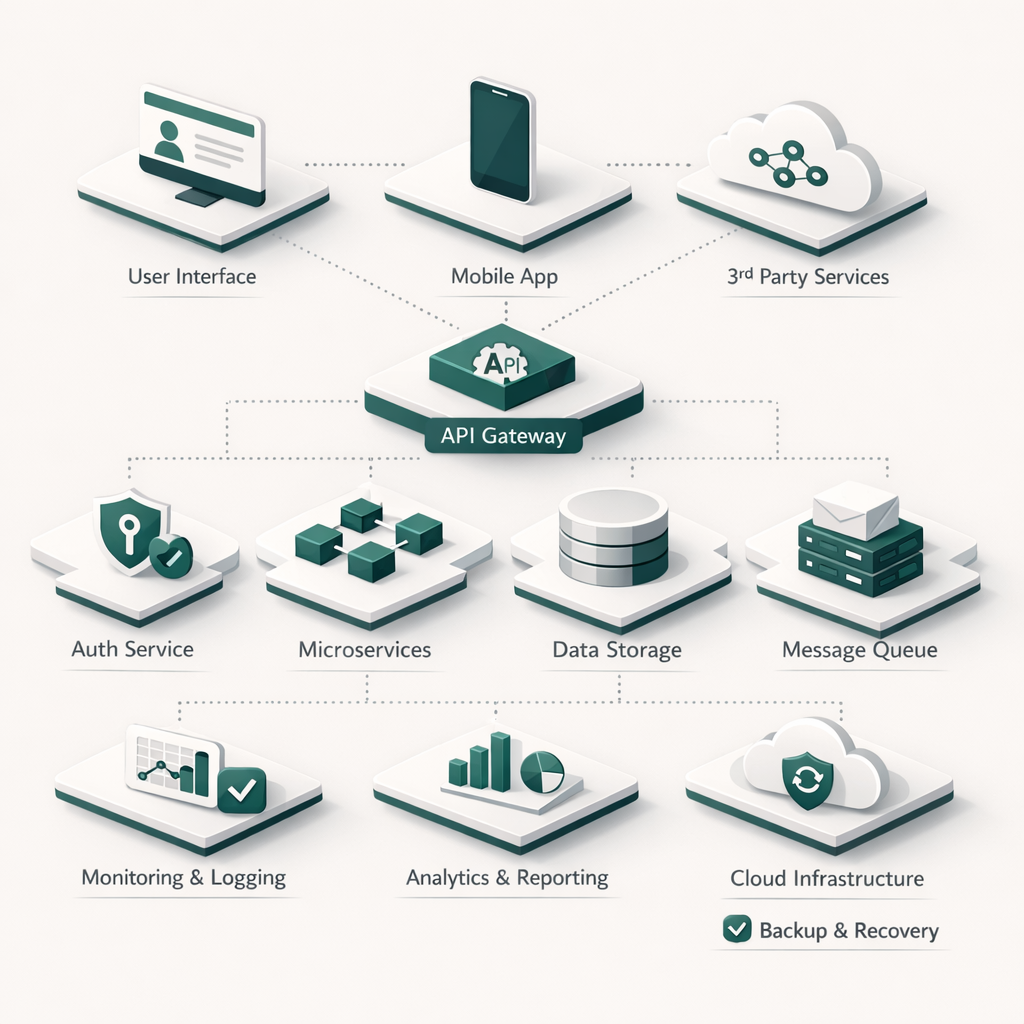
From an architecture perspective, it is necessary to determine whether the product should start with a Monolith architecture or move toward Modular Monolith or Microservices patterns from the beginning. In many projects, early adoption of complex architectures like Microservices not only does not create a tangible advantage but also significantly increases development, DevOps, monitoring, and team coordination costs. In contrast, in some products with rapid growth or highly independent services, designing a modular or service-oriented architecture from the start can create operational advantages. The goal of this service is to choose the "appropriate" architecture, not merely the "trendy" one.
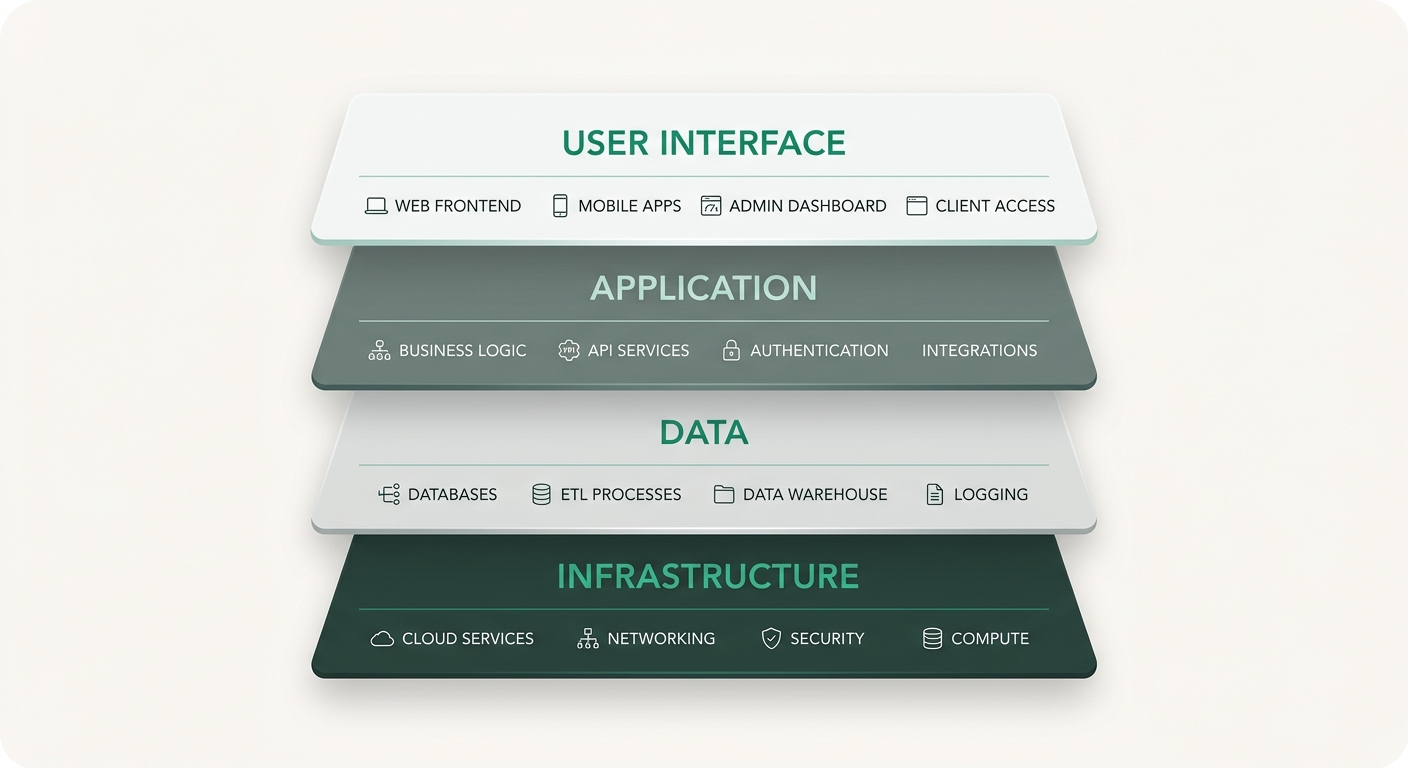
Security is also an inseparable part of architecture decision-making. If the product deals with sensitive user data, payments, organizational information, or high-level access, the architecture must be designed from the start for access control, encryption, session management, secure logging, protection against common attacks, and compliance with security standards. Many teams postpone security to later stages, while the cost of fixing wrong security decisions in the future is far greater than proper initial design.
In this service, in addition to technology selection, decisions are also made about infrastructure and deployment patterns. Whether the system runs on a dedicated server, cloud, Serverless architecture, or a combination of these depends on the nature of the product and organizational constraints. It must also be determined what level of CI/CD, staging and production environments, monitoring, logging, backup, and horizontal or vertical scalability is needed. A good architecture is one that is not only beautiful on paper but also remains efficient in execution, support, and growth.
- Selecting a stack appropriate for the product's growth stage
- Avoiding unnecessary complexities at project start
- Considering security from the beginning of design
- Designing scalable and monitorable infrastructure
- Creating a balance between development speed and long-term stability
One of the valuable outputs of this process is reducing the risk of costly decisions in the future. Incorrect technology selection can lead to a shortage of specialized workforce, performance degradation, costly rewrites, scalability issues, or strong dependency on specific tools. In contrast, the right choice helps the team start development with more confidence, allocate resources properly, and face fewer obstacles in the future for developing new capabilities or increasing users.
This service is highly important for startups at the beginning of their journey, teams planning to redesign their product, companies facing rapid user growth, or organizations wanting to modernize their legacy system architecture. Ultimately, the main goal of technology and architecture consulting is to build the product on a correct foundation; a foundation that can both meet today's needs and be ready for tomorrow's growth.